
Guinea Pig Care Guide
Written by Dr. Barry Baker, Exotic Animal Veterinarian
Guinea pigs are friendly, sociable companions that bring a lot of personality into a home. If you’re thinking about adopting one — or better yet, a pair — this guide covers the essentials, from diet and housing to common health concerns. As an AAHA-accredited veterinary hospital on the South Shore, Duxbury Animal Hospital is proud to provide knowledgeable Exotic Pet Care for guinea pigs and other small companions.

Is a Guinea Pig Right for You?
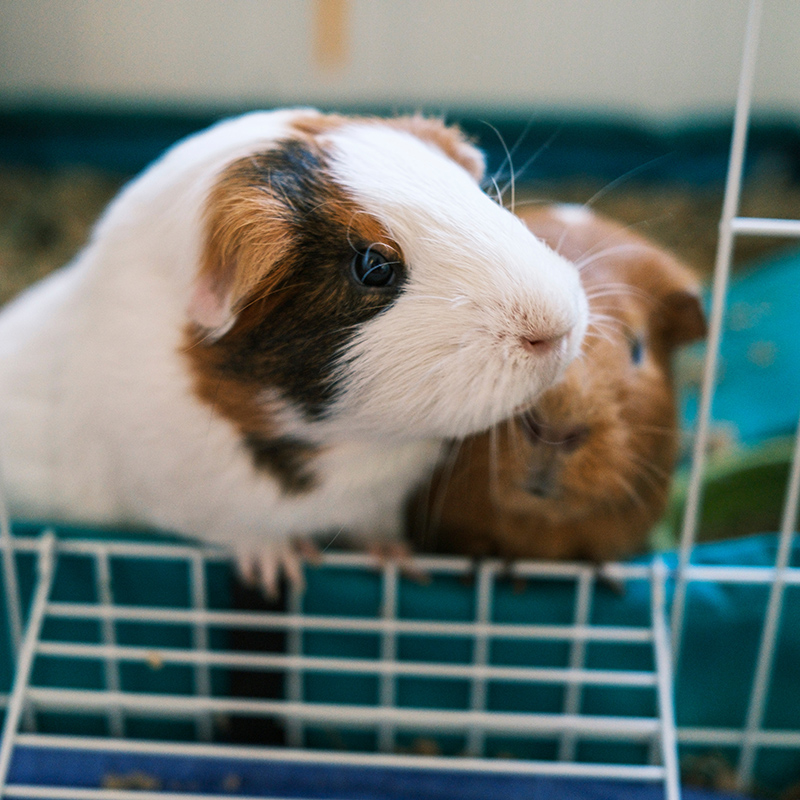
Guinea pigs typically live 6 to 8 years and thrive on social interaction. They’re ideally kept in same-sex pairs or groups, since they can become lonely on their own. If you have a single guinea pig, be prepared to spend plenty of quality time with them and provide enrichment through toys, tunnels, and attention.
One male housed with multiple females can work, but keeping multiple males with females may lead to aggression — even after neutering. Keep this in mind when planning their living arrangements.
Common Health Issues
- Dental disease
- Gastrointestinal stasis
- Pneumonia and respiratory infections
- Bladder stones
- Ovarian cysts
- Vitamin C deficiency (scurvy)
- Cancer
- Pododermatitis (sore feet)
- Conjunctivitis (eye inflammation)
Understanding Their Natural Rhythms
Spaying and Neutering
Diet: The Key to Good Health
Alongside hay, guinea pigs need daily leafy greens, especially ones rich in vitamin C. They can’t produce vitamin C on their own, so their food must supply it — try kale, parsley, red and green bell peppers, spinach, and broccoli. Small amounts of fruit such as oranges, kiwi, or tomatoes can boost vitamin C but should be treated as an occasional snack.
A guinea pig–specific pellet with added vitamin C can be included, but should never replace hay and vegetables. Be cautious with high-calcium foods, which may contribute to bladder stones.
Housing Your Guinea Pig
It’s also critical never to house guinea pigs with rabbits. Even healthy rabbits can carry bacteria that are deadly to guinea pigs, so it’s safest to keep them completely separate.

Questions About Your Guinea Pig?
If you have questions about guinea pig care or would like to schedule a wellness exam, our team is happy to help. Please call us at (781) 737-7820 or email info@duxburyanimalhospital.com. We want you and your guinea pig to enjoy a happy, healthy life together.